Reflections
 Solo
Solo  Parallel
  Games
Games  Collaboration
 My Social Backpack
How?
In the backpack, we place our physical learning metaphors, emojis, and ratings as objects for learning. We use the backpack by asking questions like:
- What did we find today that can be added to our backpack?
- What tools from the backpack did we use today?
- Which tools did we use to collaborate well/bad with each other?
- Did we find what we sought – or did we find something else?
- What can we use from the backpack next time?
Learning Metaphors
How?
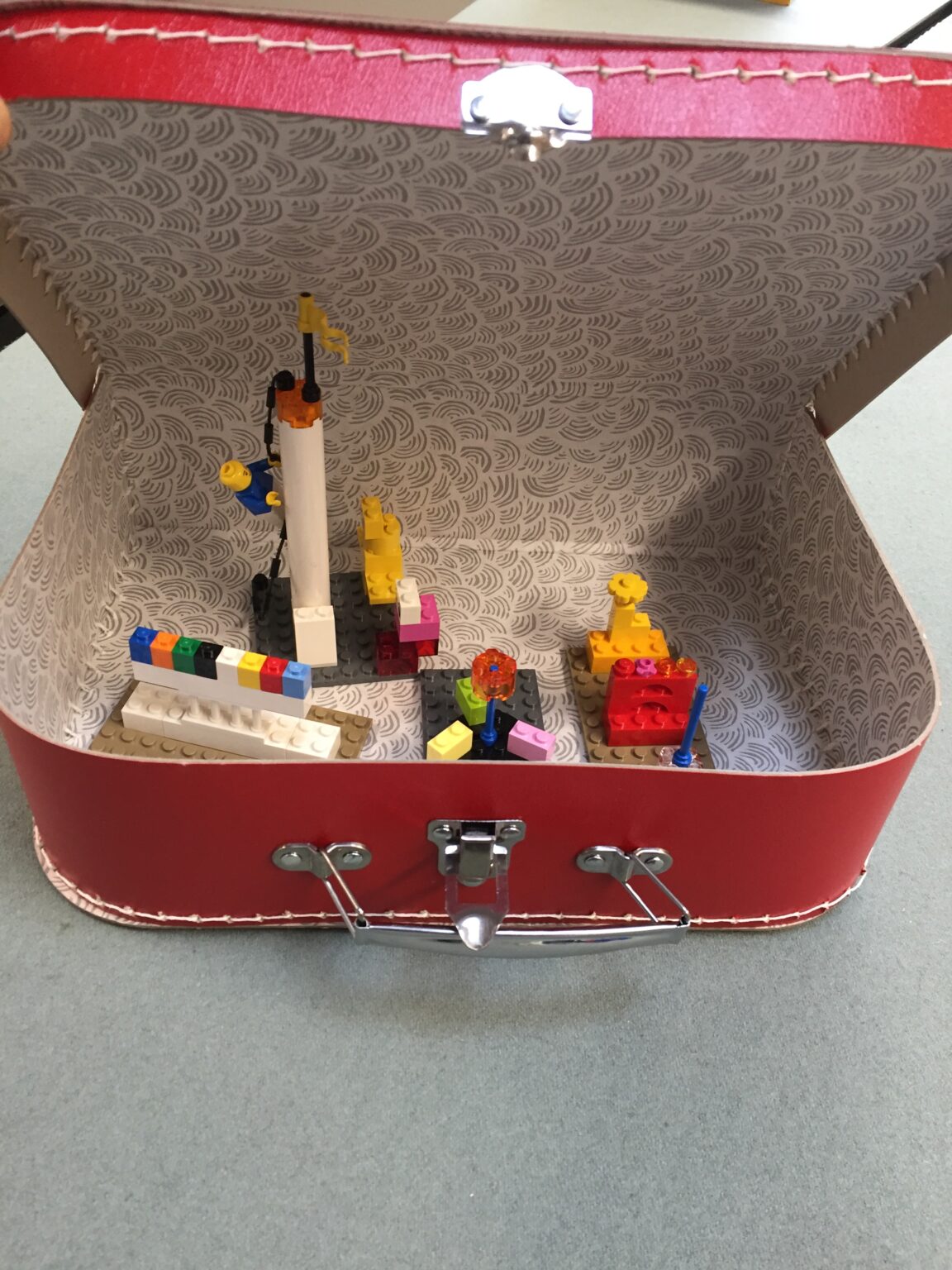
It takes practice to use the learning metaphors but when we get the hang of it, this reflection routine becomes a helpful tool for shared reflection. To get started, we can use figures built by others and later, we can start remixing old figures and build our own.
We can use the learning metaphors again and again to remind ourselves of our learning. We can save them and find them when they become relevant again. We can rebuild them if they change meaning for us, and we can bring them with us to help us apply our social learning to other situations.
Observe
What social dynamics do we notice while the children are playing?
Examples: Useful strategies (e.g. asking questions, listening, using humor, help each other), frustration and disagreements (e.g. disagreeing about ideas, different paces, lack of regulation), problem solving (e.g. tuning in on others, using many words, asking an adult, giving up) or a change of mood (e.g. celebrate a success, fooling around, being tired).
Build (or find) a figure
Which figure can help make the social experience visible?
The figure can represent a narrative about something that is happening. It does not have to look good or be resembling, as long as it makes sense to us.
It can be helpful if the adult has built some figures beforehand. Firstly, we can discuss how we understand these figures and then we can rebuild them later if their meaning changes. And maybe, we want to build our own figures.
The learning metaphors can be built by both children and adults and all types of materials are allowed to be used.
Tell
What does the figure look like and how does it represent what happened just before?
When we share our thoughts and experiences through stories, we enhance and deepen our social reflection. Hopefully, it supports our learning, and maybe we can use this learning in other situations.
Examples
Below, you find examples of learning metaphors that have been used by other children and adults to reflect on the social dynamics of their groups. They can be copied, remixed, or used as inspiration to make our learning more accessible.
Some figures represent fundamental aspects of collaboration while others resemble a more concrete metaphor, situation, or narrative. Some figures are static while other figures are mechanical and work dynamically.
The Gear Lever
The Gear Lever is a metaphor for the energy levels that occur between the children or the pace of the activity. Some children might have high energy levels while others might be in a lower gear. The Gear Lever can help the children visualize a shared gear level, so they can either gear up or gear down according to their own energy level or pace. It can also be used by the children to express which gear level they are in and what they want the others’ level to be in.
The Word Canon
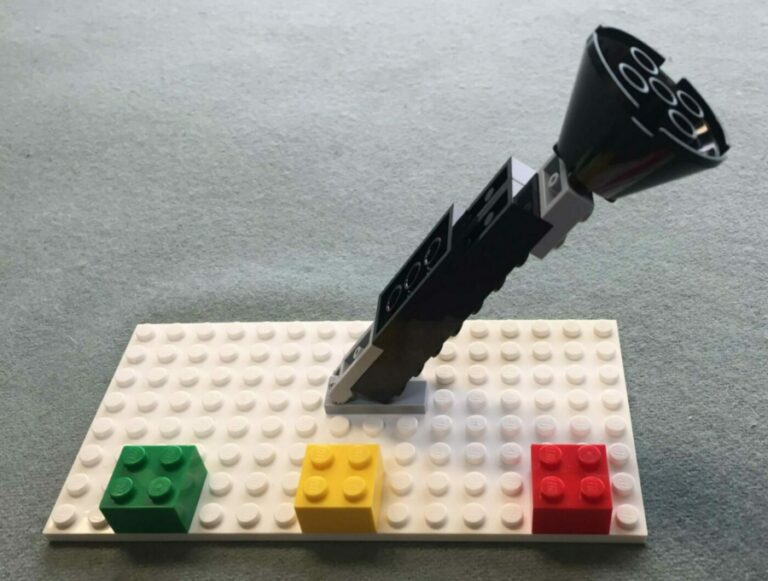
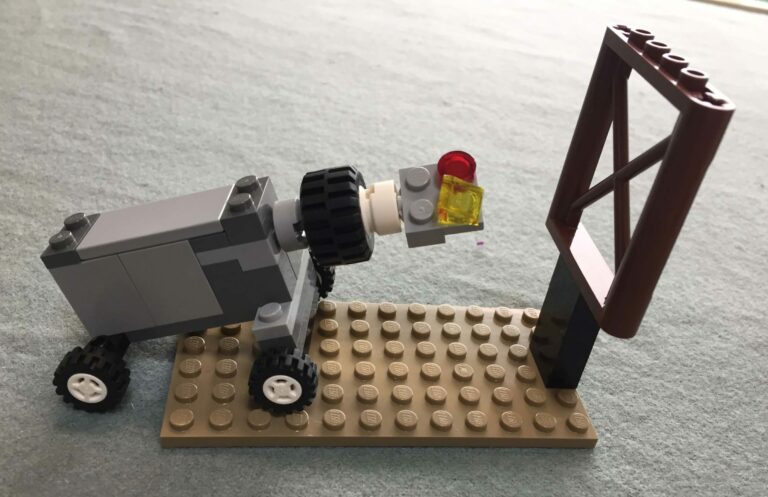
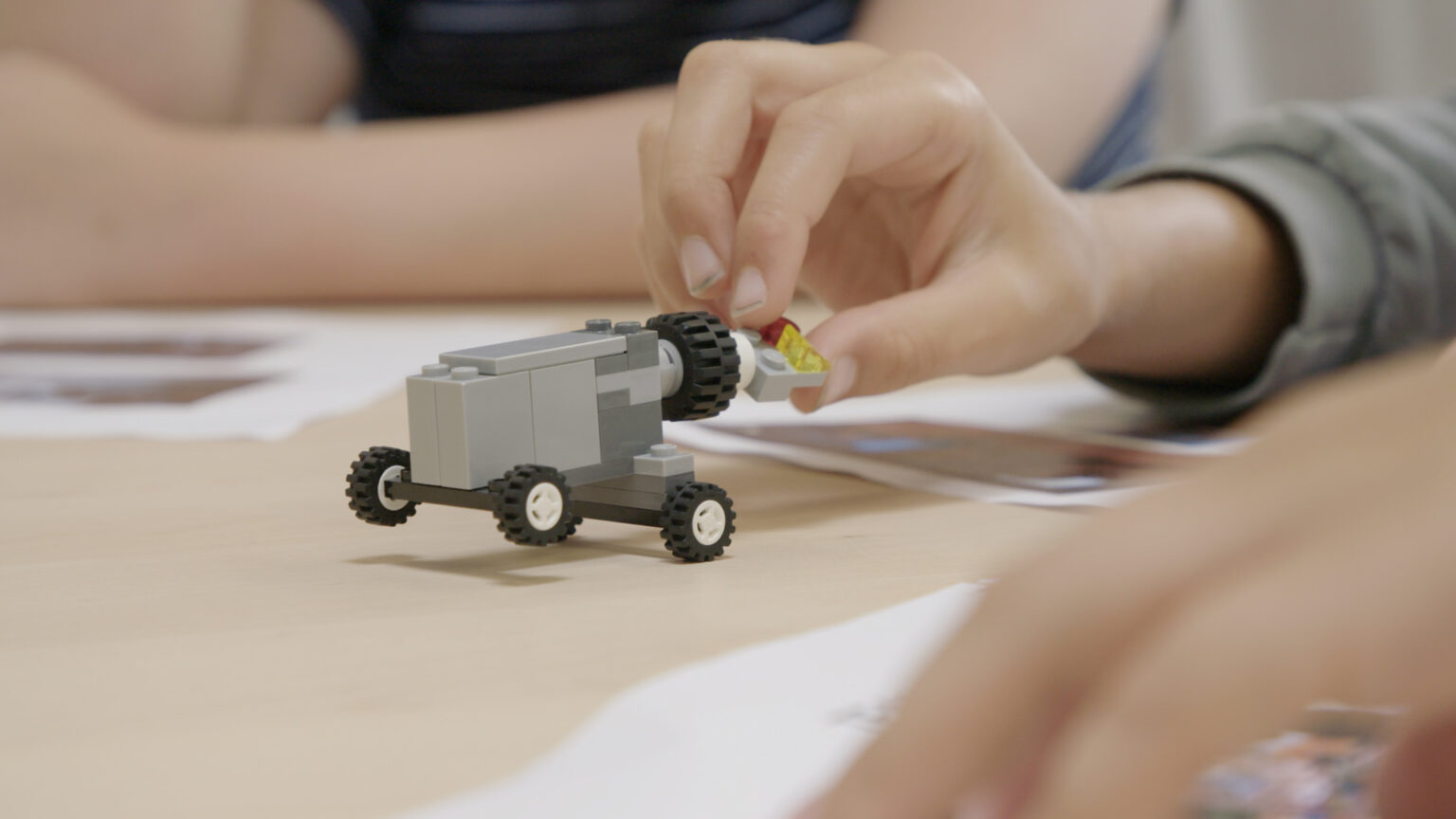
The Word Canon is a figure created by adults which helps the children shoot with their words. It becomes helpful when, for instance, the children find it hard to use their words. In this way, they are reminded that they can shoot their words at others – like a canon. The Word Canon can also be pointed at the other children that they want their words to hit. The net that follows the canon can be given to the child that the words should hit and the child can take the net to show that they are ready to catch the words and listen.
Patience
Asbjørn is a bit older than the other two children at the table. He has also participated in the activities more often than the other two. He is there because he wants to help the two other children to get to know the activities. He loves being a part of it but he’s also getting a bit impatient. The activities are starting to bore him because he has to wait for the other two. When they get to the reflection round, Asbjørn builds a figure and says, “Alright, now I’ve built a figure for patience”. He explains that waiting for the others is a bit like waiting for the train at the station. The three colored bricks represent the three children. This figure can be used when it becomes difficult to wait for the others.

Police Talk
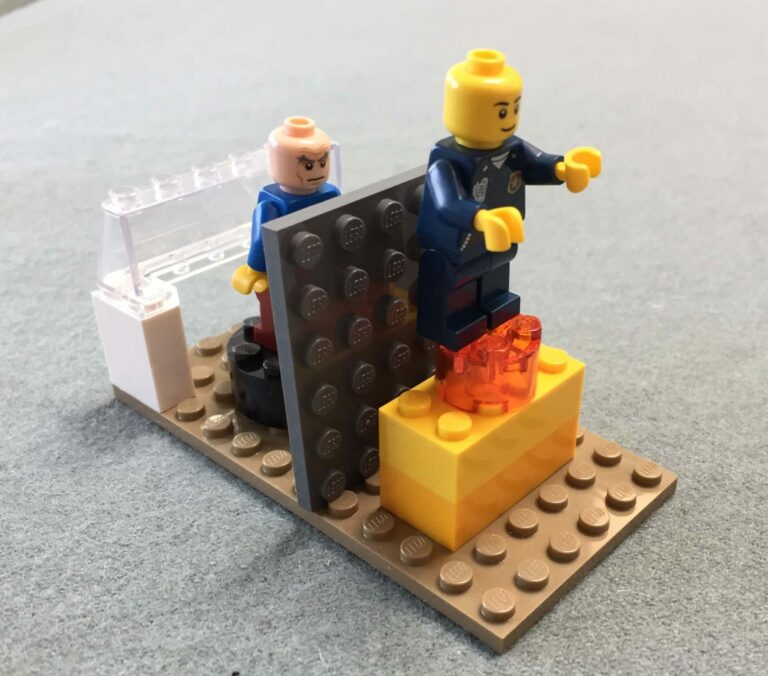
How does a gangster talk and how does the police talk? The Police Talk figure has been made by an adult who thought the children cursed a lot and ordered each other around too much. Rather than correcting them and telling them what they can and cannot say, the figure worked as an analogy to show how you can talk nicely – like the police. The adult explained the figure to the children as such: “What does the good police officer say? He says, ‘couldn’t we do it like this?’ or, ‘could we say that?’ or, ‘do you want to do this?’. This is how the police officer talks. But do you know what the gangster says? He says, ‘give me that!’, ‘hand me this!’, ‘I want that!’. He talks really badly. So while you are playing today, try to notice whether you talk like a police officer or like a gangster. Okay?”
Collaboration
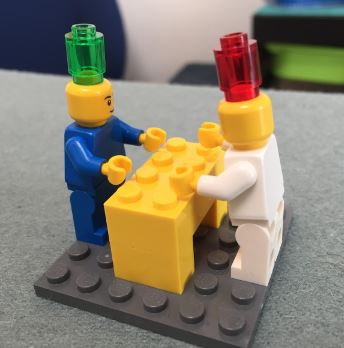
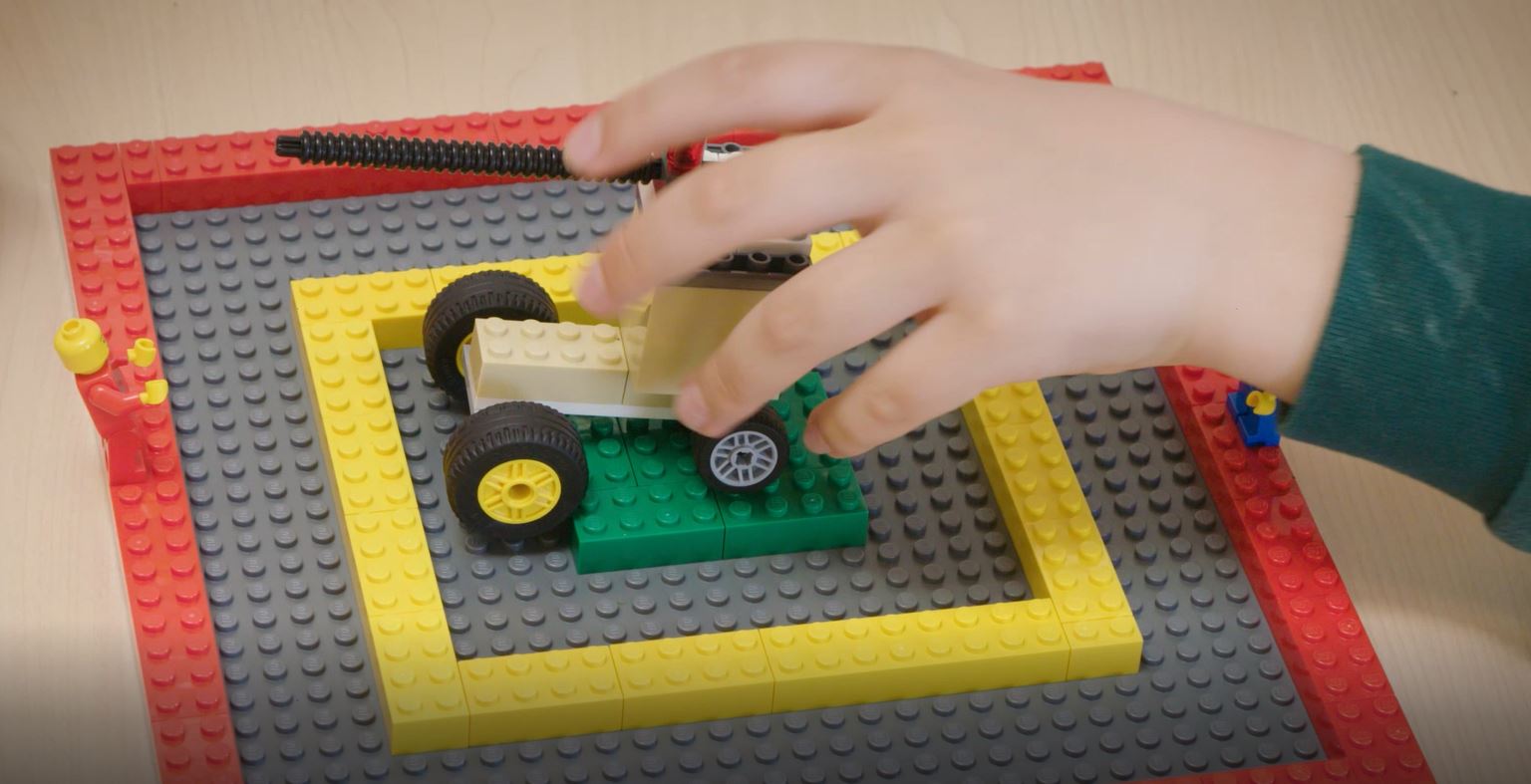
The Collaboration figure is one of the many ways to show the children how collaboration works. Although the figure is simple, it has many aspects that can show different things. For instance, the LEGO men can be moved around to visualize the actual social actions of the children – maybe a child has turned their back to the table where the others are doing the activity, which then can be visualized by also turning the LEGO-man on the figure. The adult can thereby show the children what they have observed during the activity and what is necessary for their collaboration. The figure can also show how the children think differently and have different abilities by, for instance, using different colored bricks on the LEGO-men’s heads. In this way, the children can see that they all contribute with something different to the group through collaboration.
The Glasses
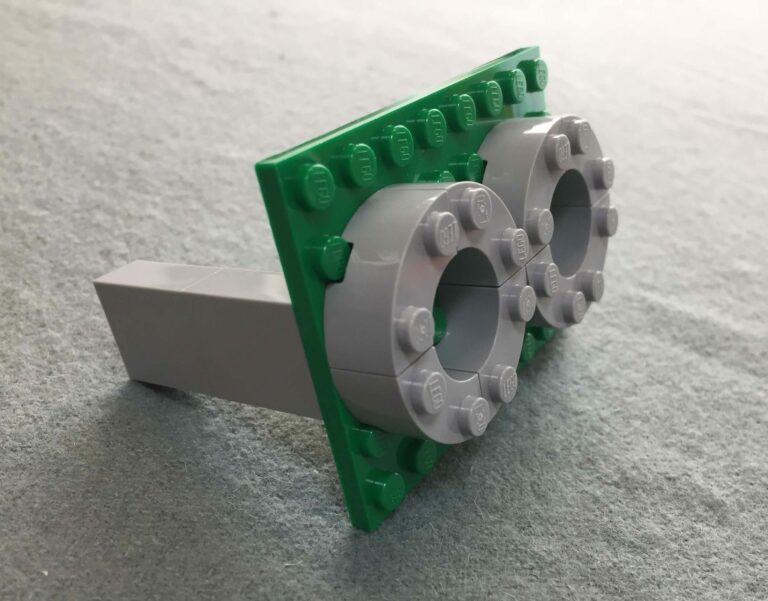
When working together it’s important to notice what the others are doing and how they are feeling. The glasses can help the children remember to look at the others, maybe one at the time, to notice how they are doing. The glasses can be used to focus on others and practice what it means to look at each other and check in on them. This figure is just one symbol of looking at each other. There are other figures that could be more appealing to the children, like a telescope or a radar.
Emojis
How?
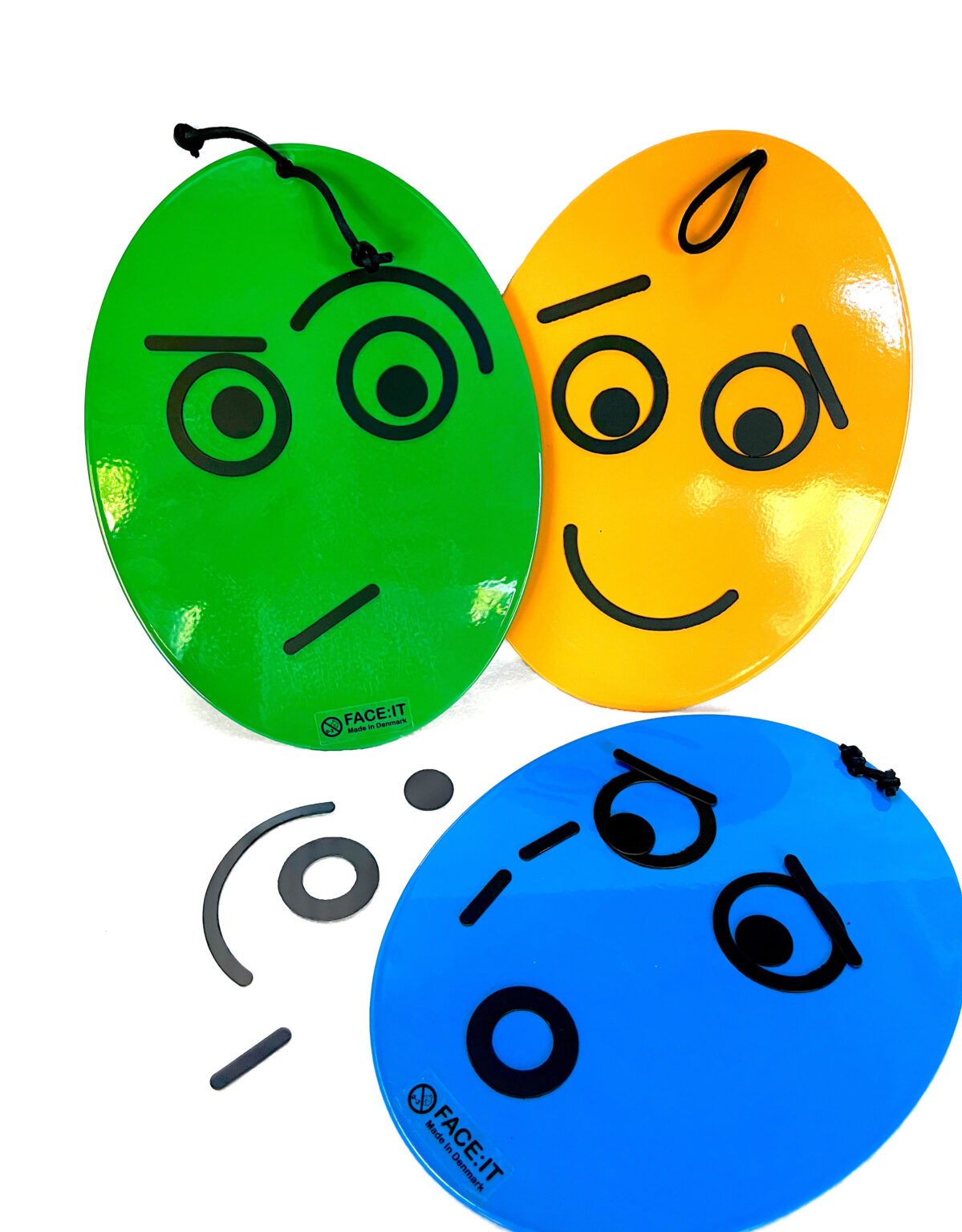
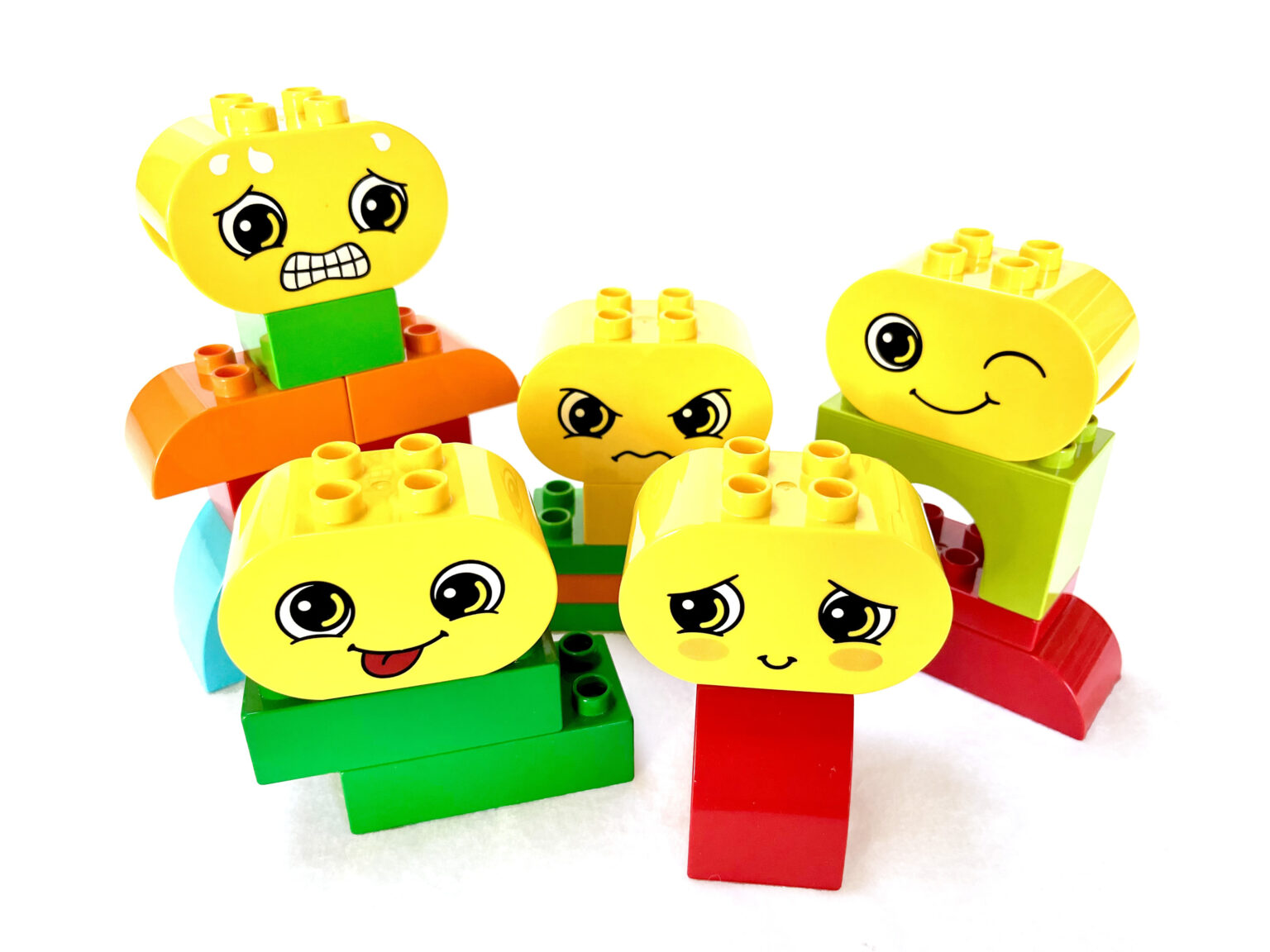
Depending on our level of experience to register and talk about emotions and feelings, we can begin in different places:
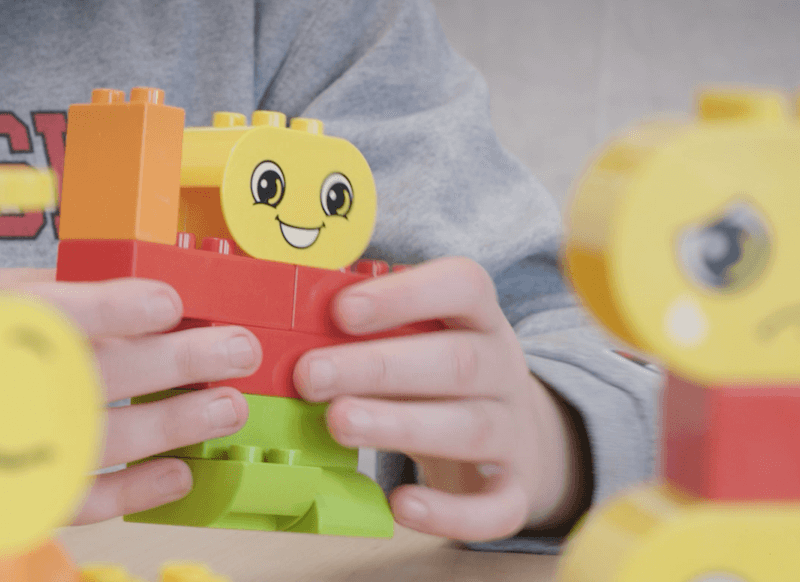
My feelings: Which emoji fits me right now? Maybe I would like to choose several emojis? Which emotion is the most dominant right now?
The others’ feelings: What emojis have the others chosen? I wonder if I can guess them?
Group feelings: Starting with our own emojis, can we combine each others’ feelings and find out how they are connected?
Mixed feelings: Sometimes we have more feelings than one at the same time going in opposite directions. Maybe we can build a ‘mix of feelings’?
Avatars and Ratings
How?
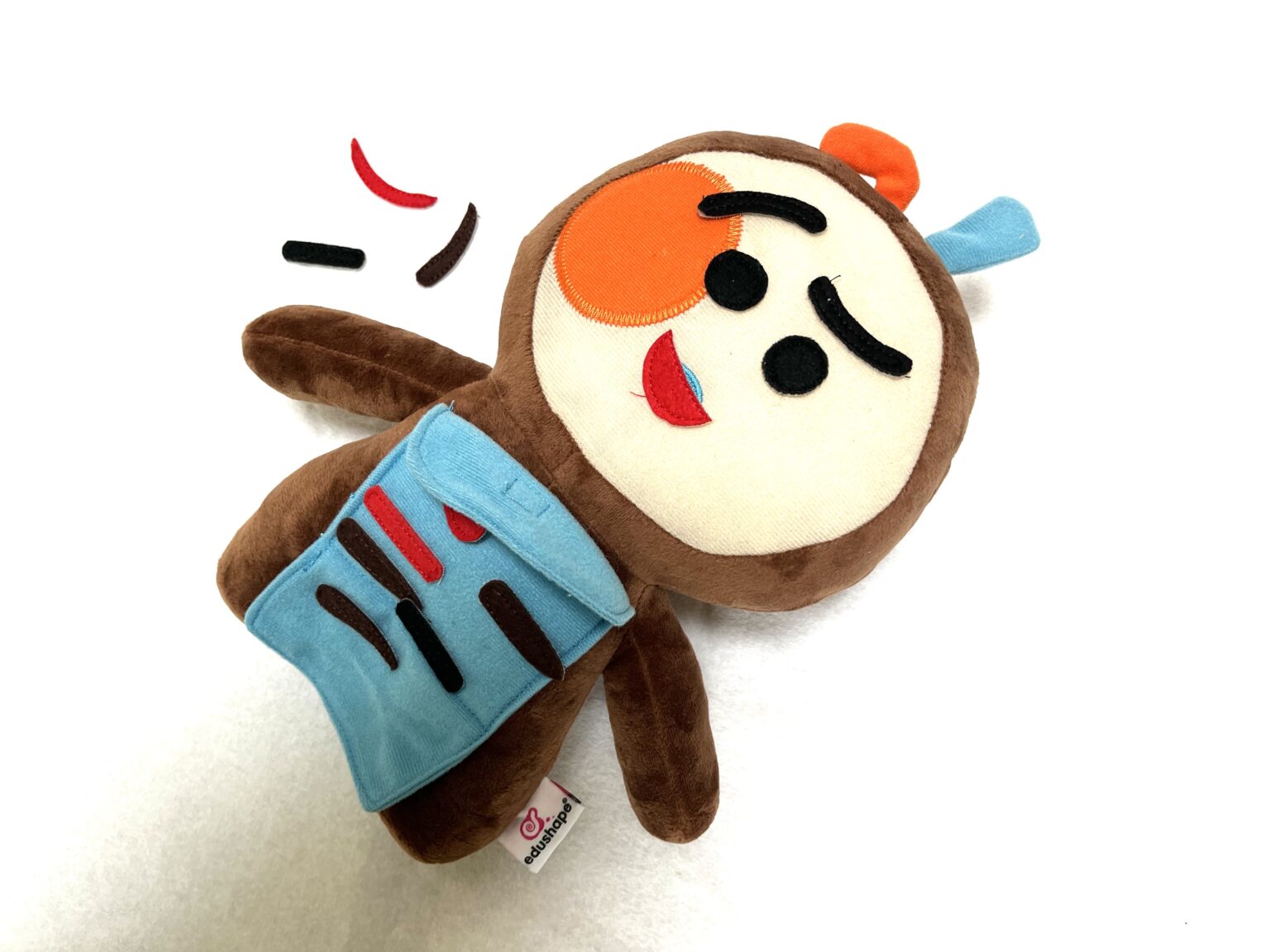
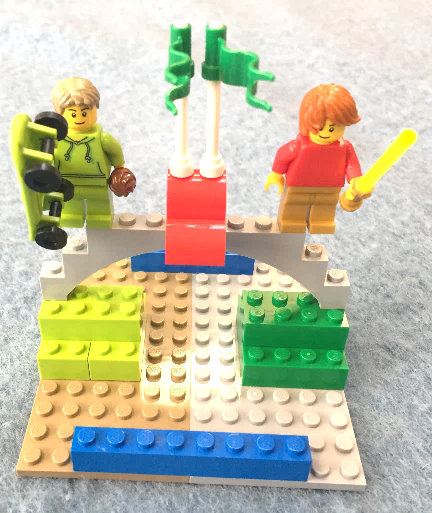
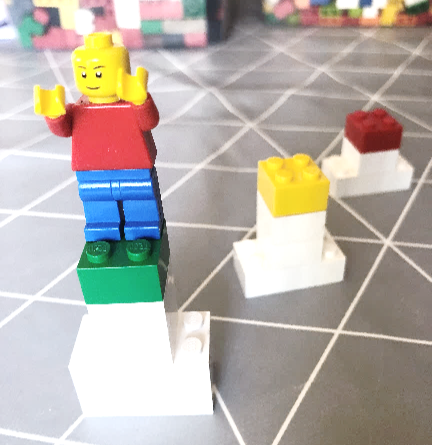
We start by building a personal avatar that represents ourselves. We can use this to rate how we feel or how we think something went by placing it on a scale. Based on this, we can talk about why our avatar was placed there.
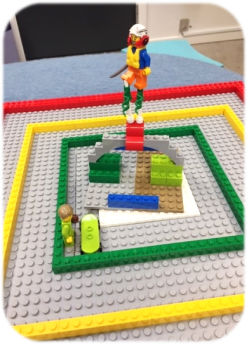
We use the rating to talk about the social dynamics, collaborative experiences, the learning environment, and specific goals that we are motivated to work towards. We do not rate our personal skills or performances but rather our group as a social learning group. Therefore, we can also design different kinds of rating scales.
What can we rate?
The learning environment: We place our avatars on the scale to rate how close or how far we were from experiencing excitement and joy when we collaborated.
Energy: We place our avatars in either the green, yellow, or red zone to indicate how exhausted we are.
The collaboration: We each place our avatars on a spot on what we built today. We choose the spot where we think our collaboration was most successful while building our figure.
Learning metaphor: We place our avatar by the learning metaphor that we think best fits our experience of our building.
Routine